Last updated on 10 November 2026
Mathematics and Numeracy
Overview
Mathematics and Numeracy is one of the six Areas of Learning and Experience in the Curriculum for Wales. It covers the number system, algebra, geometry and measurement, and statistics and probability. It has four statements of what matters. Financial literacy sits inside the number statement, so it has no separate strand.
Hwb (the Welsh Government's digital learning platform, where the curriculum guidance lives) treats mathematics and numeracy as two linked things. Mathematics is the discipline of abstract ideas, symbols and reasoning. It "teaches the difference between conjecture, likelihood and proof". Numeracy is "the application of mathematics to solve problems in real-world contexts". Progression rests on five proficiencies with no hierarchy: conceptual understanding, communication using symbols, fluency, logical reasoning and strategic competence. Hwb also wants learners to build mathematical resilience. In the early years, "play forms an important part".
The statements of what matters Code is made under the Curriculum and Assessment (Wales) Act 2021. It requires your curriculum to incorporate all four statements. You decide how to organise and sequence the teaching. Hwb's guidance says sequencing should be informed by "the hierarchical and connected nature of mathematical concepts". Algebra, geometry and statistics cannot be understood without a prior understanding of number. Numeracy is one of the three mandatory cross-curricular skills, so every practitioner in the school shares responsibility for it. For the full framework, read the Mathematics and Numeracy guidance on Hwb.
What does Mathematics and Numeracy look like in practice?
Number
Algebra
Geometry and measurement
Statistics and probability
Financial literacy
Statements of what matters
The 4 statements below are the official wording from the Curriculum for Wales. Together they set out the big ideas learners should come to understand in Mathematics and Numeracy.
The number system is used to represent and compare relationships between numbers and quantities
Algebra uses symbol systems to express the structure of mathematical relationships
Geometry focuses on relationships involving shape, space and position, and measurement focuses on quantifying phenomena in the physical world
Statistics represent data, probability models chance, and both support informed inferences and decisions
Progression in Mathematics and Numeracy
Progression step 1
Progression step 2
Progression step 3
Progression step 4
Progression step 5
How does Mathematics and Numeracy relate to the four purposes?
Ambitious, capable learners
Enterprising, creative contributors
Ethical, informed citizens
Healthy, confident individuals
Cross-cutting themes
Local, national and international contexts
Careers and work-related experiences
Relationships and sexuality education
Cross-curricular skills
Literacy
Numeracy
Digital competence
Thinking tools for Mathematics and Numeracy
Practical classroom strategies that develop thinking skills across Mathematics and Numeracy. Each tool is ready to use in your next lesson.
Exploring Wrong Answers
A feedback strategy where wrong answers are examined rather than dismissed, helping learners trace exactly where their thinking went off track.
Assessment for learning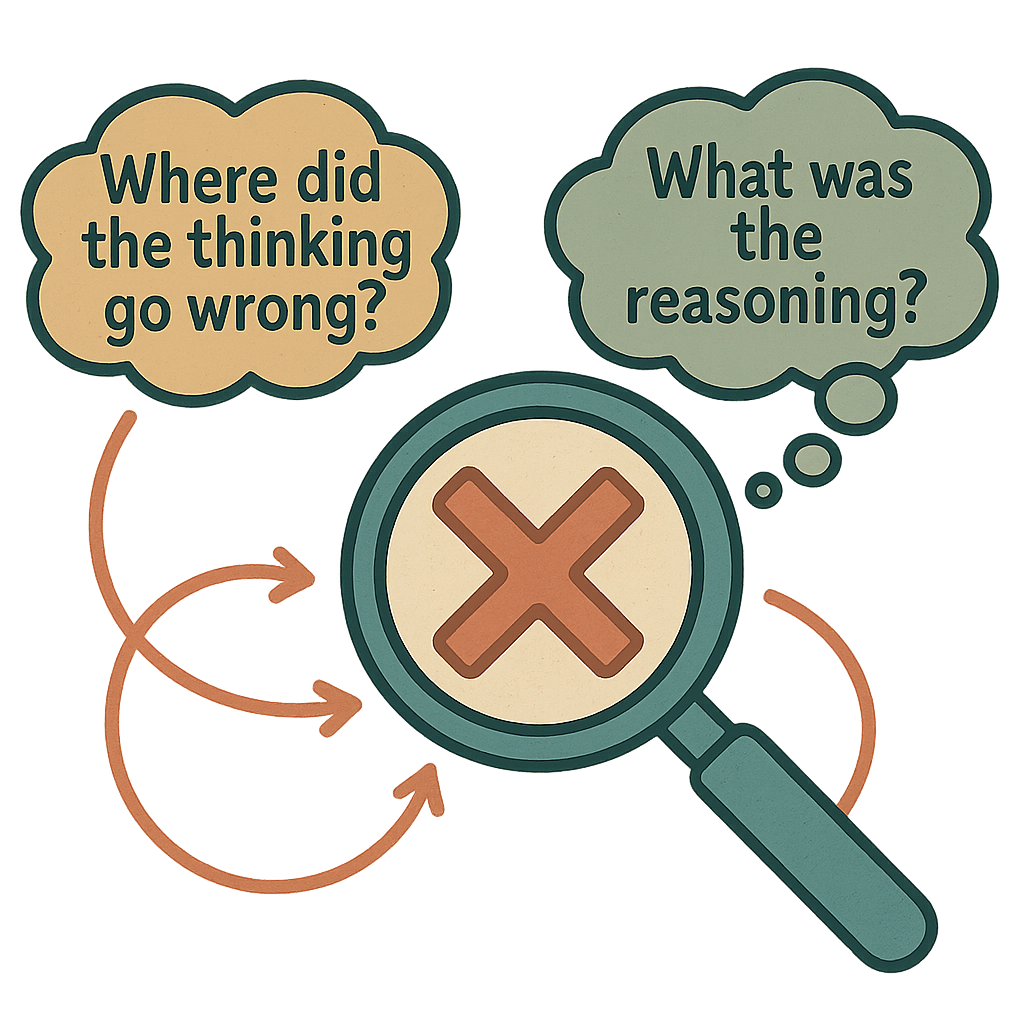
Living Graphs
An interactive graph where learners place statement cards at the correct position on pre-labelled axes, exploring cause and effect, change over time, and spatial relationships.
Visual organisers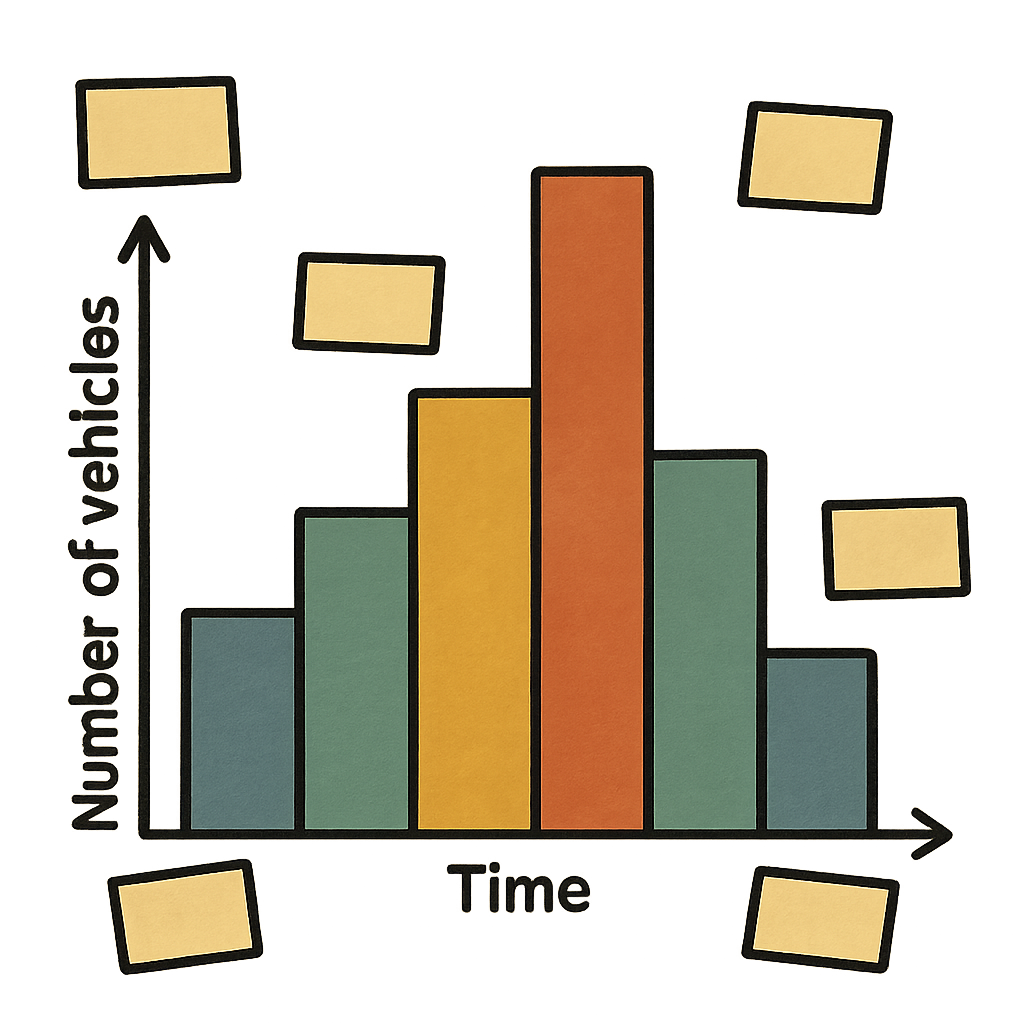
Mini-Whiteboards
A whole-class response tool where every learner writes their answer on a small whiteboard and holds it up simultaneously, giving the teacher instant feedback on understanding.
Assessment for learning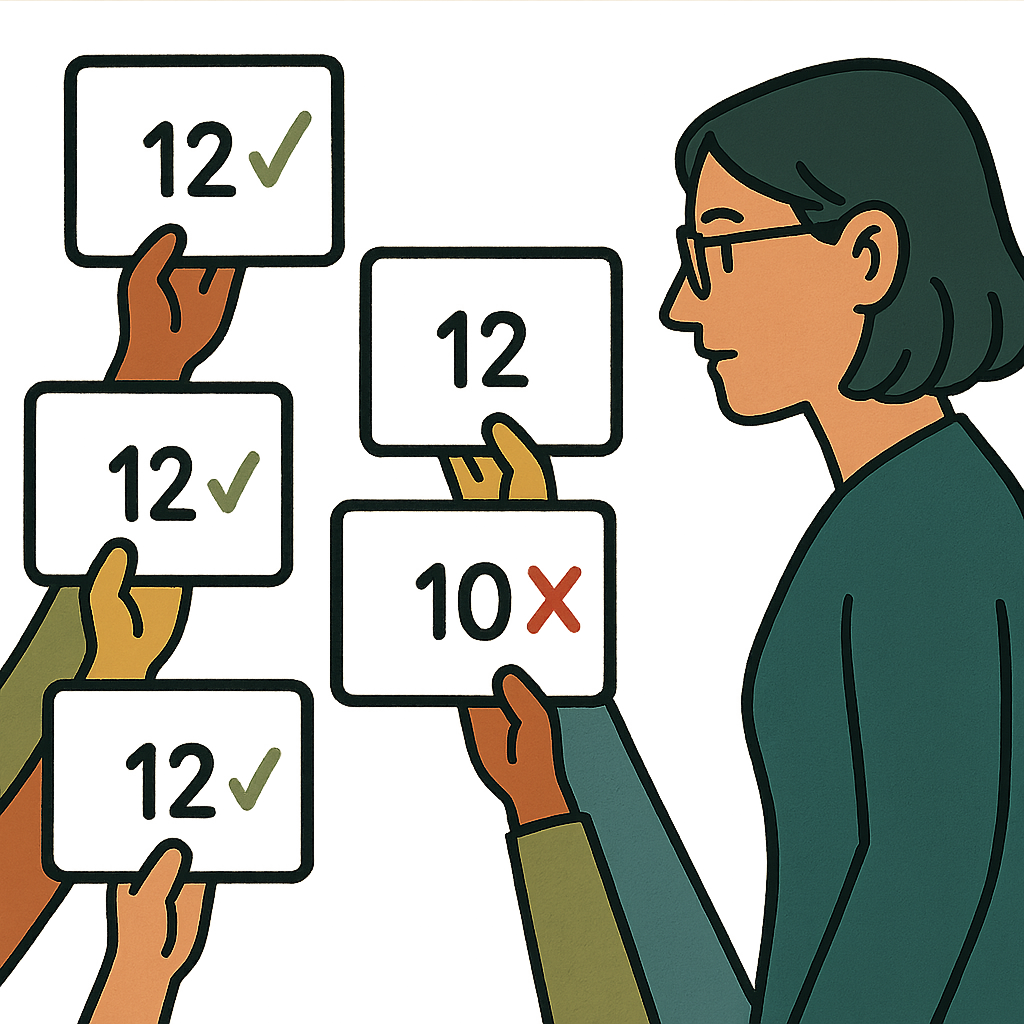
Odd One Out
A quick classification tool where learners choose which item doesn't belong in a set and, crucially, explain why.
Ranking & sorting
Think-Pair-Share
A three-stage discussion framework where learners first think individually, then discuss with a partner, then share with the wider group, ensuring all learners engage with the question before whole-class discussion.
Discussion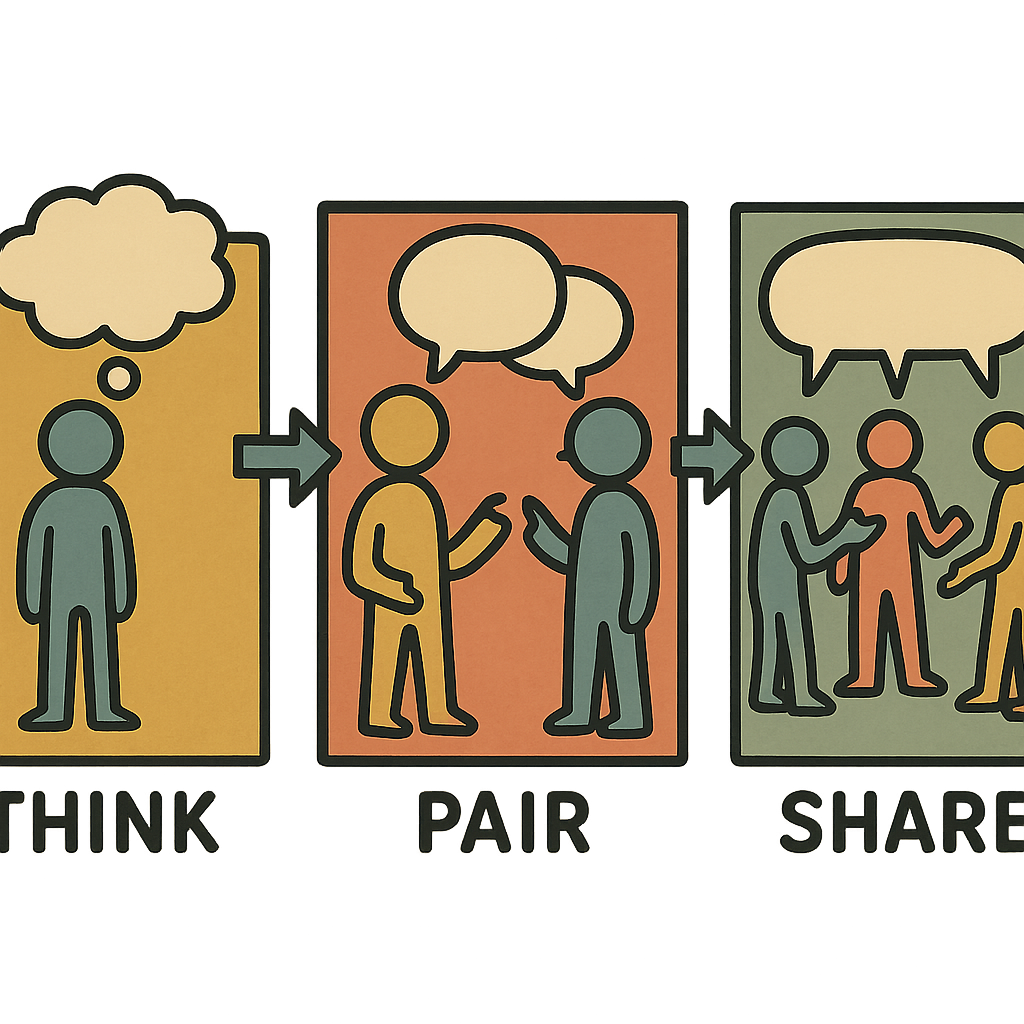
Whole and Part
An analytical tool where learners examine how individual parts contribute to a whole, developing understanding of systems, structures, and the relationships between components.
Visual organisers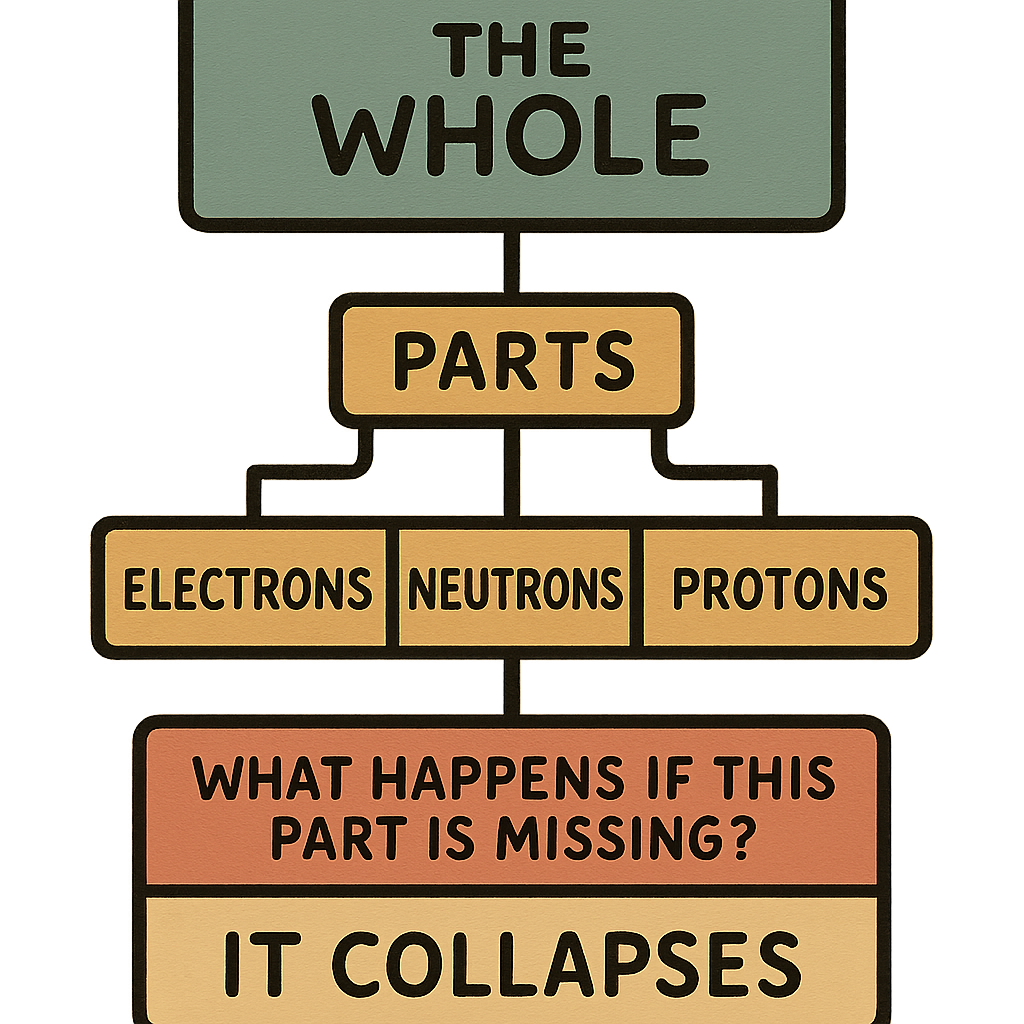
Common questions about Mathematics and Numeracy
Yes. Under the Curriculum and Assessment (Wales) Act 2021, your curriculum must incorporate all four statements of what matters (the statements of what matters Code). It must also follow the principles of progression (the Progression Code). You need a plan that shows both.
Hwb's guidance says sequencing "should be informed by the hierarchical and connected nature of mathematical concepts". Number comes first, and later ideas build on it. Hwb says the four statements "should not be viewed in isolation", so plan the links between number, algebra, geometry and statistics.
Use the progression steps as reference points to check that learners are moving on in all five proficiencies: conceptual understanding, communication using symbols, fluency, logical reasoning and strategic competence.
Progression steps are reference points on a continuum. Hwb says the five steps "broadly correspond to expectations at ages 5, 8, 11, 14 and 16". The descriptions of learning at each step are not assessment criteria or year-group targets.
In Mathematics and Numeracy, progression rests on five proficiencies: conceptual understanding, communication using symbols, fluency, logical reasoning and strategic competence. Each step describes learning across all four statements of what matters. At step 3, learners use function machines and simple equations with unknowns, an early form of the algebra they formalise later. Use the steps to inform planning and assessment, and to talk honestly with learners about where they are and where they are heading.
Every teacher shares responsibility for numeracy. Hwb says literacy, numeracy and digital competence are mandatory cross-curricular skills. It is "the responsibility of all practitioners, across all curriculum areas, to develop and ensure progression in these skills". Plan for numeracy where it already appears in your subject: interpreting data in Humanities, measuring in Science and Technology, reading a timeline in history. The Mathematics and Numeracy Area teaches the underlying mathematics. Numeracy is applying it in real contexts. The maths team can share the vocabulary and methods learners use, so the whole school builds on the same foundations. The Literacy and Numeracy Framework is non-statutory supporting guidance.